Project Overview
Security companies operate in the dark. Supervisors dispatch guards to sites but have no real-time visibility into whether patrols are being completed, checkpoints are being reached, or incidents are being reported accurately. They rely on end-of-shift paperwork, radio check-ins, and trust — none of which provide the auditable evidence clients and tenders demand.
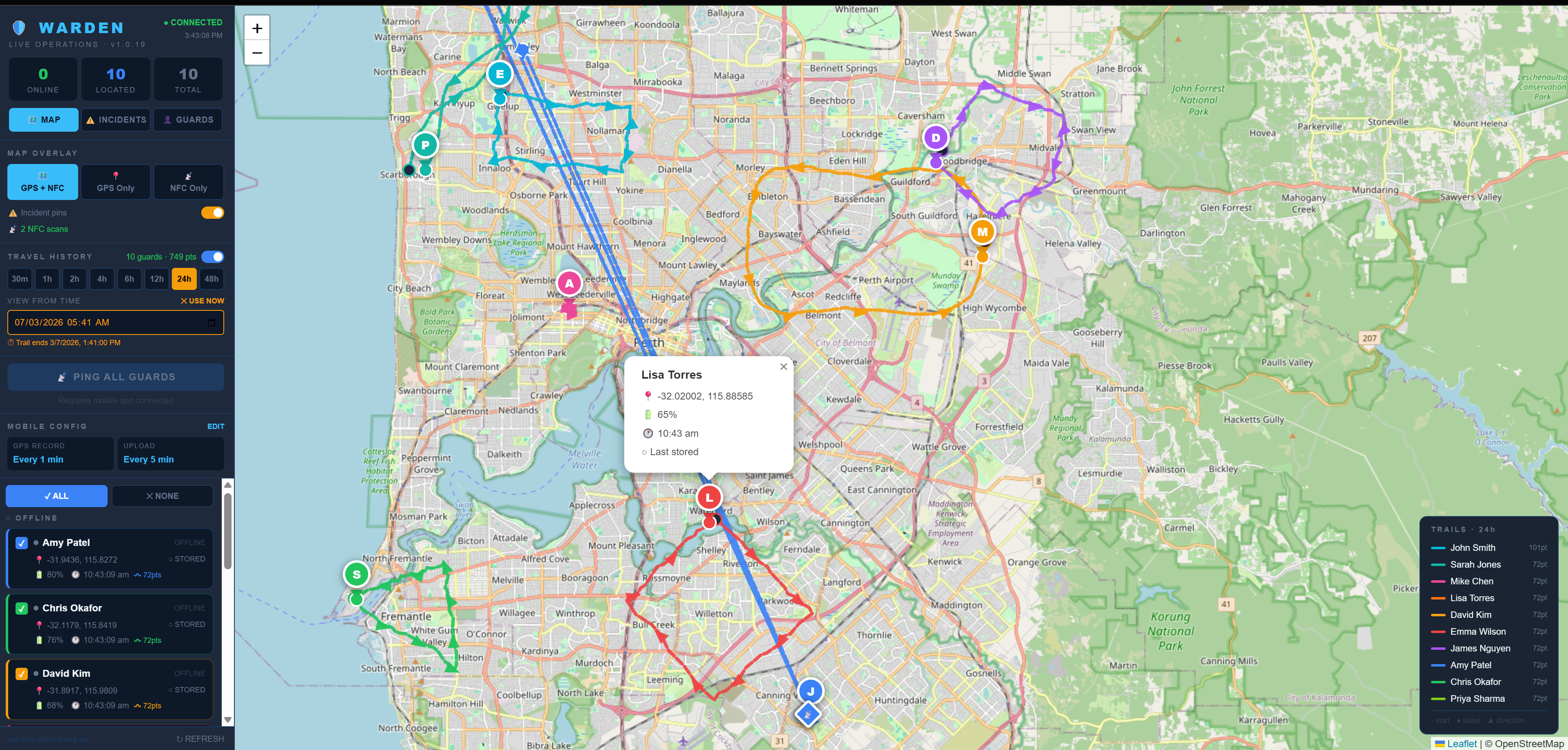
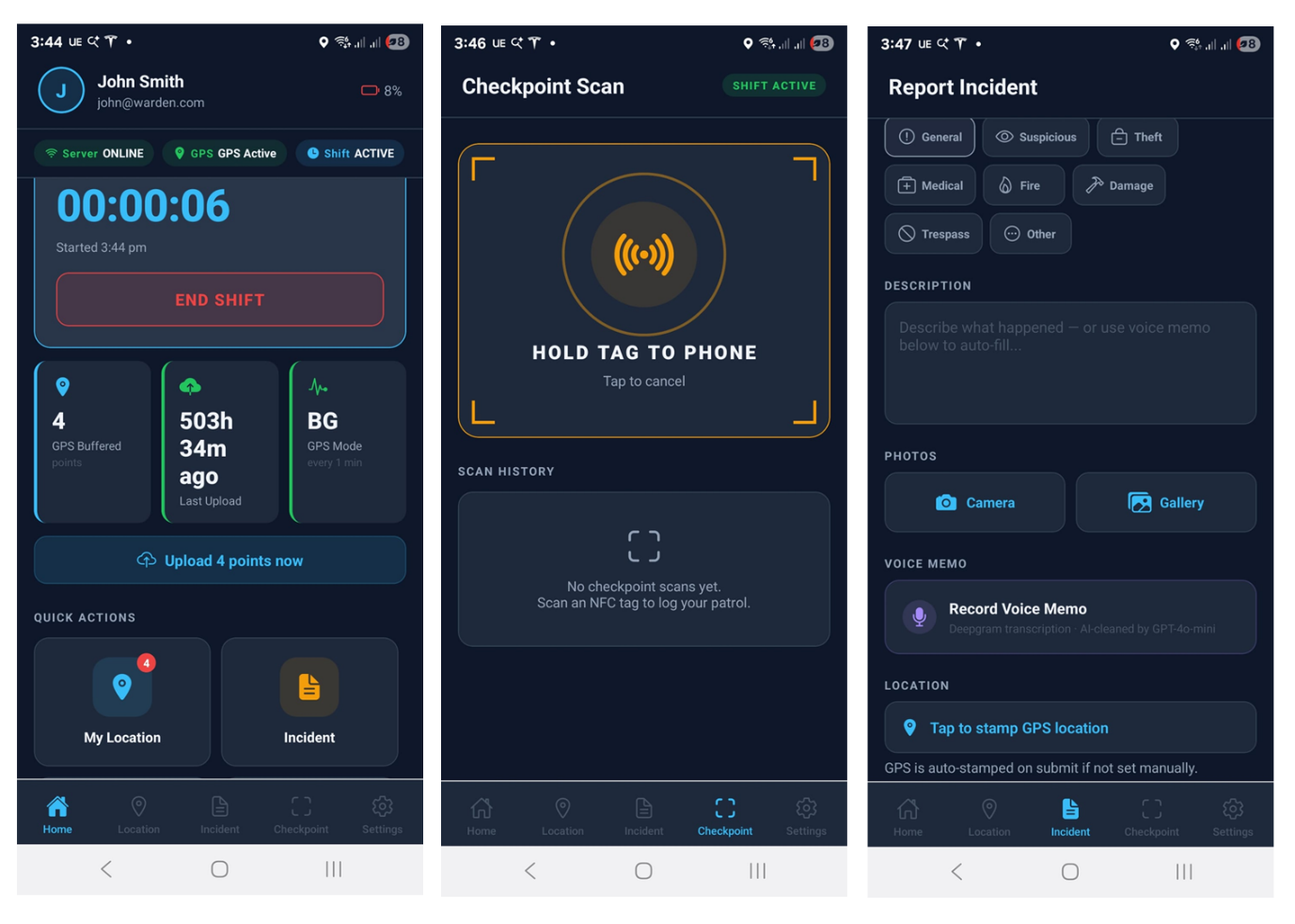
WARDEN closes this visibility gap completely. Guards carry a mobile app that records GPS positions every minute, verifies checkpoint visits via NFC tap, and captures incident reports with photos, voice memos, and AI-cleaned professional narratives. Supervisors see all of this in real time on a live map dashboard via WebSocket connection.
The platform is engineered for the realities of field security work: guards lose connectivity in basements and car parks, their phones suspend background processes, and their token sessions expire during 12-hour shifts. WARDEN handles all of it — offline GPS buffering covers ~8 hours of disconnected operation, a native Android background task survives JS thread suspension, and soft authentication on telemetry endpoints ensures location data is never lost due to expired tokens.
Every timestamp is localised to AWST (UTC+8), and every patrol trail, checkpoint scan, and incident report creates a defensible audit trail for client reporting and tender compliance.
Key Features
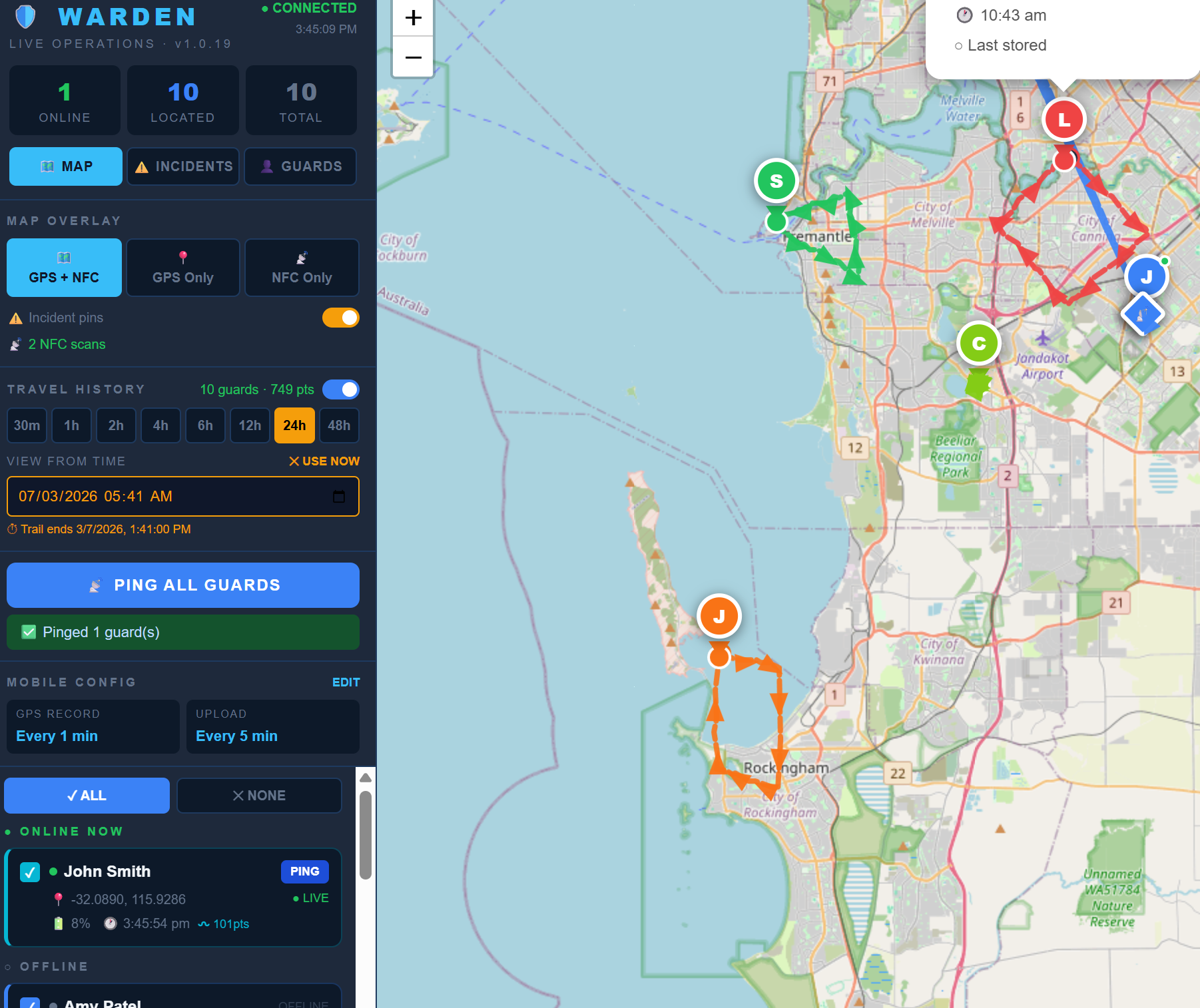
Live GPS Tracking — 1-minute interval recording with real-time trail visualisation on a Leaflet map dashboard, providing continuous patrol visibility
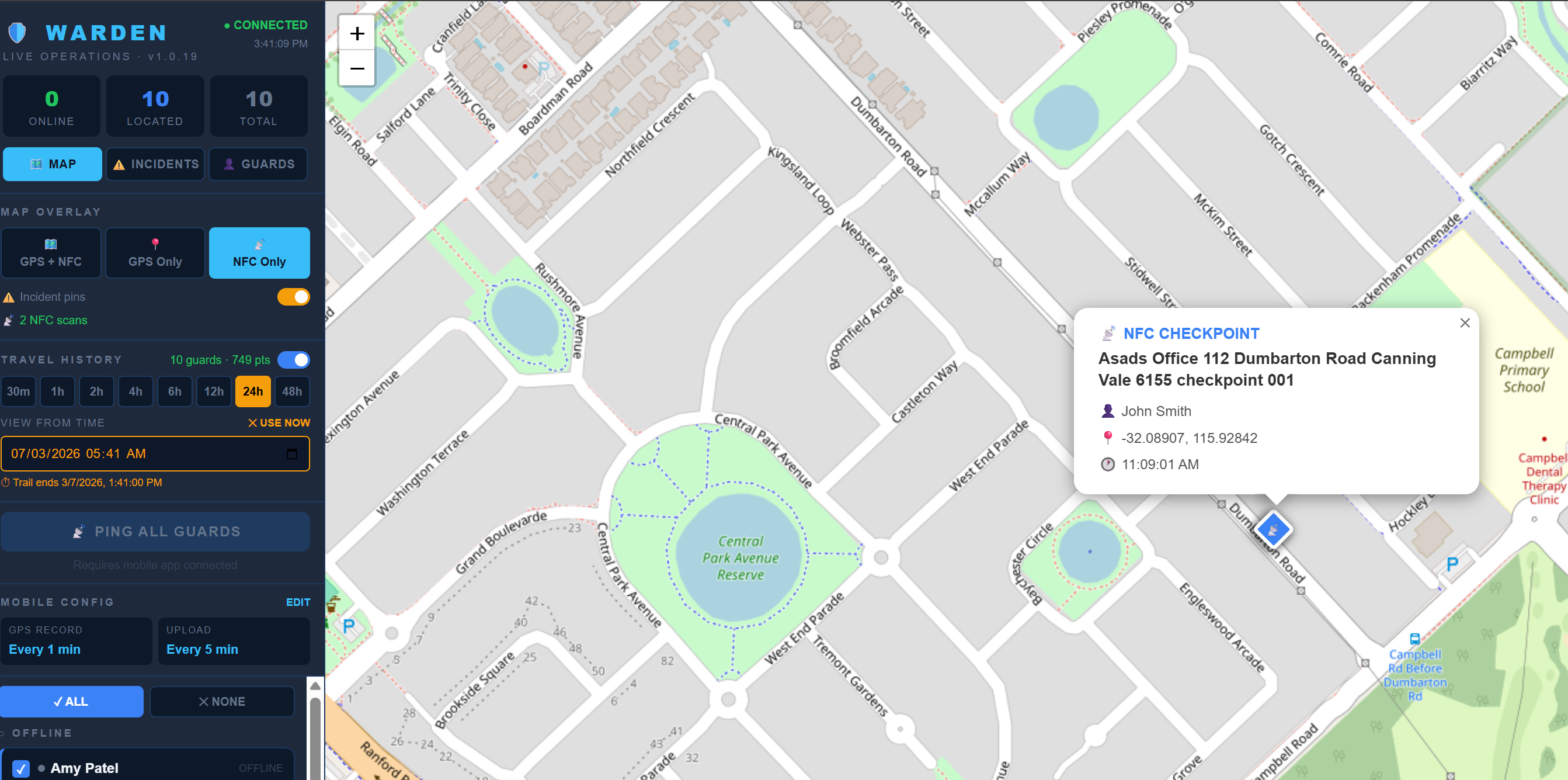
NFC Checkpoint Verification — Guards tap NFC tags at patrol points for cryptographically verified proof of presence, timestamped and geolocated
AI Incident Reporting — Voice memo recording with Deepgram transcription and GPT-4o-mini cleanup into professional security report language
Photo Evidence Capture — Up to 4 photo attachments per incident report, eagerly uploaded to cloud storage in the background
Offline GPS Buffering — ~8 hours of disconnected patrol recording with automatic sync on reconnect, ensuring zero data loss in connectivity dead zones
Guard Liveness Monitoring — Heartbeat/ping system alerts supervisors when a guard stops transmitting, enabling rapid welfare checks
Smart Authentication — Hard auth on sensitive routes, soft auth on background telemetry to prevent data loss when tokens expire during long shifts
Native Background GPS — Android background task offloaded to native thread, surviving JS suspension that kills standard React Native location tracking
Real-Time Supervisor Dashboard — WebSocket-powered live updates showing guard positions, patrol status, and incoming incidents
AWST Localisation — All timestamps localised to Western Australian Standard Time for operational accuracy
Technology Stack
AI & Speech
Real-Time Comms
Mobile
Backend
Database & Storage
Mapping
Architecture
Impact & Results
WARDEN replaces manual logbooks and end-of-shift reporting with continuous, timestamped, location-verified evidence of guard activity. Security companies gain defensible audit trails for client tenders and compliance reviews — the kind of documentation that wins contracts.
The offline-first design and soft-auth background telemetry ensure no patrol data is ever lost during connectivity drops or token expiry — the two most common failure modes in field security deployments that competing solutions consistently fail to handle.
AI-assisted incident transcription cuts report-writing time and standardises the language guards submit to supervisors, reducing both administrative load and report-quality variance across shifts. What used to take 15 minutes of paperwork per incident now takes a 30-second voice memo.