Project Overview
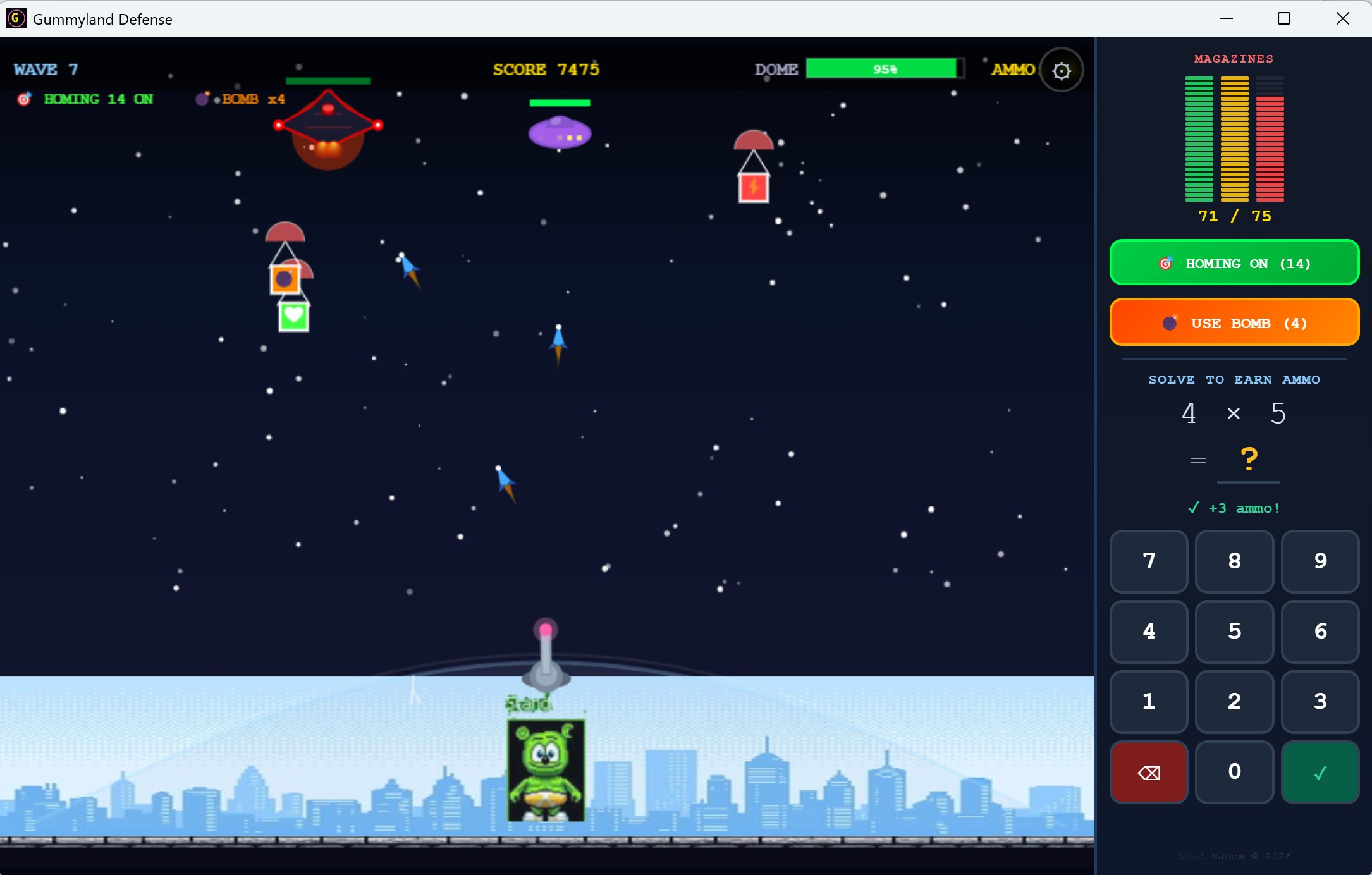
Evil aliens are attacking Gummyland, and only YOU can save it! Solve math problems to earn ammo, blast the invaders, and protect your city. Every correct answer makes you stronger — addition, subtraction, and times tables all become weapons in your hands. With no time pressure, awesome power-ups, and real prizes to win, children have so much fun they don't even realise they're becoming math champions. Defend Gummyland — one answer at a time!
Gummyland Defense was created by a father who wanted to help his son fall in love with math. Designed specifically for children who find numbers challenging — including those with dyscalculia, learning difficulties, and autism — this game replaces the anxiety of worksheets with the thrill of defending a city from alien invaders. Every bullet is earned through a correct answer, turning math from a chore into a superpower.
With no time pressure on problems, gentle difficulty curves, encouraging voice feedback, and real-world prizes as milestones, Gummyland Defense meets children where they are and proves that the best way to learn is when you don't even know you're learning.
Key Features
Math-Powered Combat — Every bullet is earned by solving a math problem correctly. Addition, subtraction, and multiplication become weapons against alien invaders
Zero Time Pressure — Math problems have no countdown timer, removing anxiety and letting children think at their own pace while the action continues around them
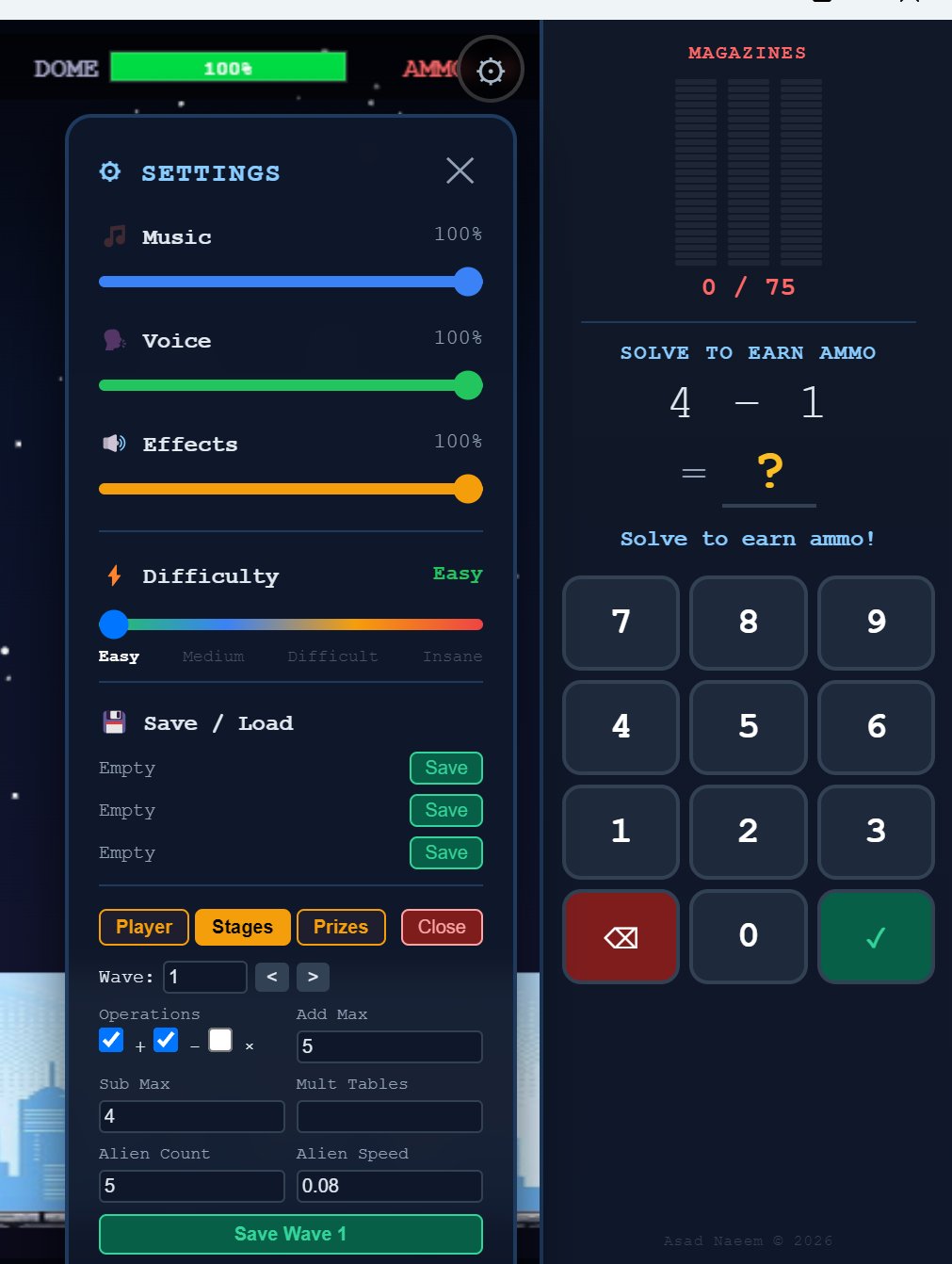
Adaptive Difficulty via Admin Panel — Administrators can configure which stage tests which skills, set max values for operations, alien count, and speed — tailoring the experience for every child at every level
Designed for Neurodivergent Learners — Built specifically for children with dyscalculia, learning difficulties, and autism, with gentle progression and encouraging feedback
Voice Feedback & Encouragement — Audio cues celebrate correct answers and gently guide through mistakes, building confidence alongside competence
Power-Ups & Special Weapons — Homing missiles, bombs, and shield upgrades reward sustained play and correct answers, adding excitement and tactical depth
Real-World Prize System — Milestone-based prizes motivate continued practice with tangible rewards children can look forward to
Wave-Based Progression — Escalating waves of alien invaders with increasing difficulty keep the challenge fresh and engaging across multiple sessions
Save & Load System — Multiple save slots allow different children to maintain their own progress independently
Full Audio Controls — Separate music, voice, and effects volume sliders with customisable settings for sensory-sensitive players
Technology Stack
Game Engine
Audio
Education Logic
Platform
Admin Tools
Impact & Results
Gummyland Defense transforms math practice from a source of anxiety into something children actively ask to do. By embedding arithmetic inside a compelling game loop, children complete hundreds of problems per session without the resistance typically associated with math homework.
The admin panel allows parents, teachers, and therapists to precisely target each child's learning needs — starting with simple addition for younger learners and progressively introducing subtraction and multiplication tables as confidence builds. The zero-time-pressure design is critical for neurodivergent learners who need processing time without the stress of a ticking clock.
Built as a proof of concept that educational software doesn't have to be boring — and that the fusion of game design and pedagogical principles can make real, measurable differences in how children relate to mathematics.