Project Overview
The client employs over 200 staff across multiple regions, many of whom are field workers submitting expenses in multiple languages using paper receipts. Accountants were drowning in manual data entry, translation, and reconciliation — a process that was slow, error-prone, and disconnected from their ERP system.
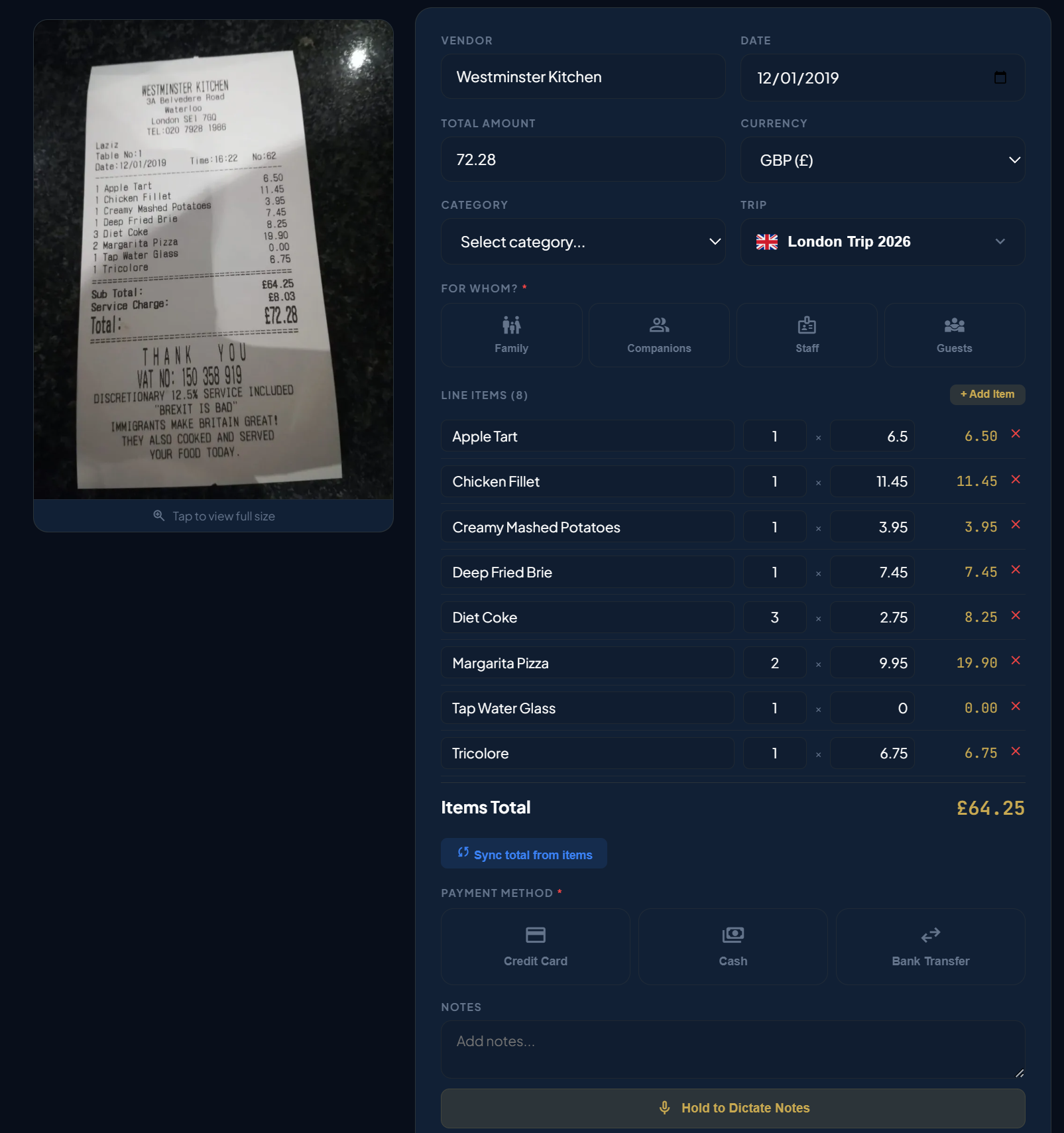
The Custom Financial Ledger replaces this entire workflow with AI. Employees photograph receipts in any language and the system extracts vendor, amount, date, line items, and local VAT automatically using GPT-4o Vision. They can dictate voice notes in their native dialect — including Arabic with code-switching — and the platform transcribes and translates to English for accountant review.
The mobile app works offline-first, meaning field employees, drivers, and travelling staff can submit expenses from anywhere without connectivity. When they're back online, everything syncs. Approved expenses flow directly into Oracle NetSuite as the system of record, eliminating duplicate keying entirely.
Built with full Arabic RTL support, regional data residency compliance, and role-based security enforced at the database level, The platform is designed for the realities of enterprise deployment across diverse regions.
Key Features
AI Receipt Scanning — GPT-4o Vision extracts vendor, amount, date, line items, and local VAT from receipts in 100+ languages automatically
Voice Notes in Native Language — Azure OpenAI GPT-4o transcription handles Arabic dialect, code-switching, and 98+ languages with automatic English translation
Offline-First Mobile Capture — Photos, voice recordings, and forms persist locally via WatermelonDB and sync automatically when connectivity returns
Oracle NetSuite Integration — Bi-directional sync: inbound employee/cost-centre data, outbound approved expenses with receipt attachments via REST API with exponential-backoff retry
Multi-Level Approval Workflows — Configurable auto-approve thresholds, bulk approval for accountants, mandatory rejection notes, and real-time notifications via Supabase Realtime
Role-Based Security — Employee, accountant, and admin dashboards enforced via Postgres Row-Level Security policies — not just UI-level checks
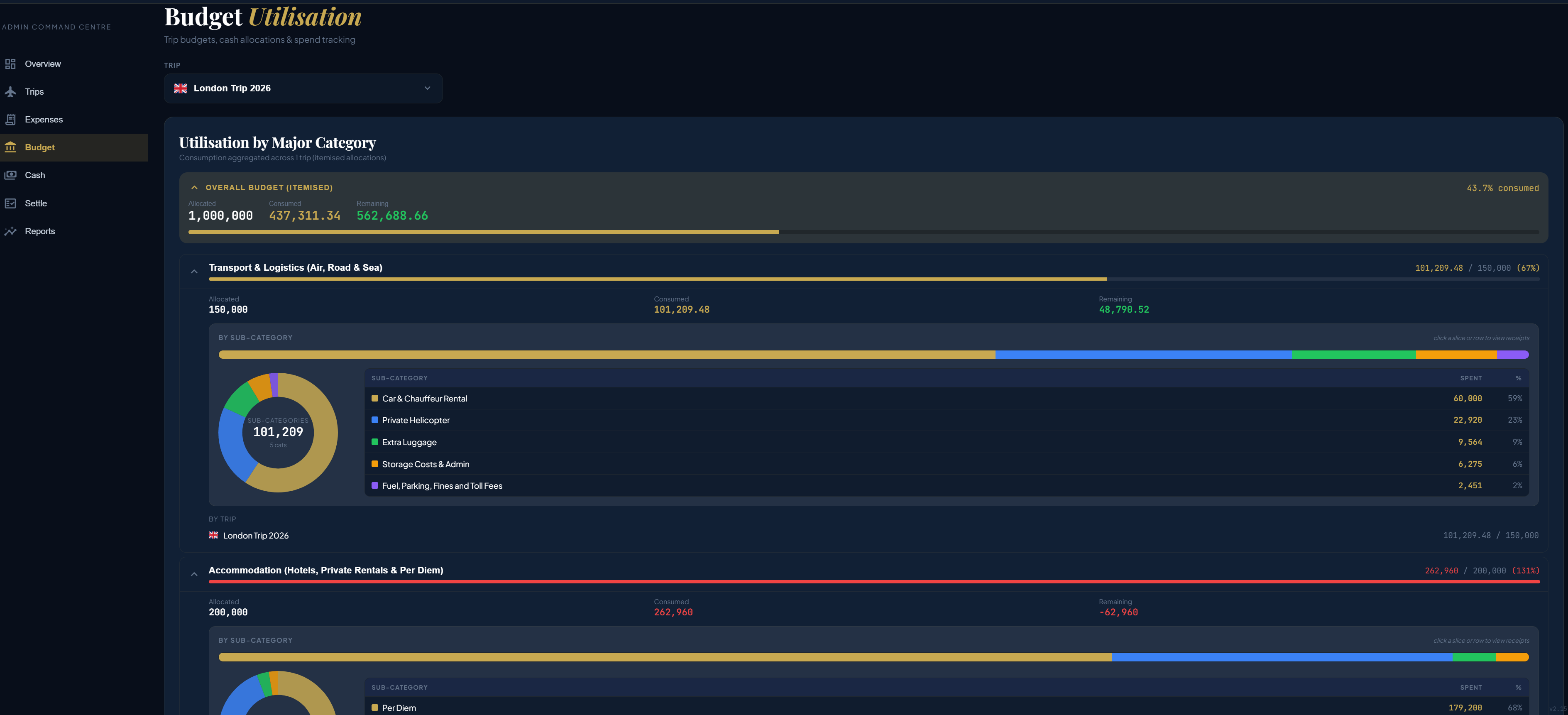
Recurring Expense Automation — Set-and-forget recurring entries, Excel/CSV bulk import with column mapping, and budget-vs-spend tracking by department
Full Arabic RTL Support — Native right-to-left UI across web and mobile, multi-currency support with SAR default
Corporate SSO — Supabase Auth with SAML 2.0 for Active Directory integration
Regional Data Residency — Middle East region hosting for full Regional data privacy compliance
Technology Stack
Computer Vision / OCR
Speech & NLP
Mobile
Web
Backend
ERP Integration
Architecture
Compliance
Impact & Results
The platform eliminates the manual data-entry, translation, and reconciliation work previously consuming accountant hours processing multilingual paper receipts. AI extraction costs roughly $0.006 per receipt and voice transcription runs at $3.54 per 1,000 notes — a fraction of human processing costs.
Offline-first capture means field employees, drivers, and travelling staff can submit expenses from remote locations across multiple regions without connectivity concerns, while approved transactions flow directly into Oracle NetSuite without duplicate keying.
Unlimited user licensing and full code ownership remove per-seat scaling costs and vendor lock-in as the workforce grows beyond the initial 200+ employees, delivering a platform that becomes more cost-effective at scale rather than more expensive.