
Project Overview
Commercial cleaners are inside every office building, shopping centre, and facility every single day. They see dripping taps, cracked tiles, flickering lights, and damaged fittings — but these issues go unreported. Why? Language barriers, no structured reporting process, and zero communication channel between cleaners, operations managers, and property owners.
CleanTech WA turns this untapped workforce into a building intelligence network. Cleaners report issues by speaking into their phone in any language — Tagalog, Mandarin, Hindi, Arabic, Portuguese — and the platform automatically transcribes, translates to English, extracts the specific maintenance issues, and categorises them by trade type (plumber, electrician, carpenter, etc.).
But the real innovation is the trade clustering engine. Instead of sending a plumber to one building for a leaking tap and then another plumber to a building next door for a blocked drain, CleanTech groups issues by trade and geographic proximity. One plumber, one trip, multiple fixes. This alone can cut client callout costs by 30-50%.
The platform includes a structured 5-step mobile workflow for cleaners (Before → Cleaning → After → Issues → Done), an admin portal for scheduling and oversight, and a client portal with real-time job tracking and downloadable maintenance report PDFs.
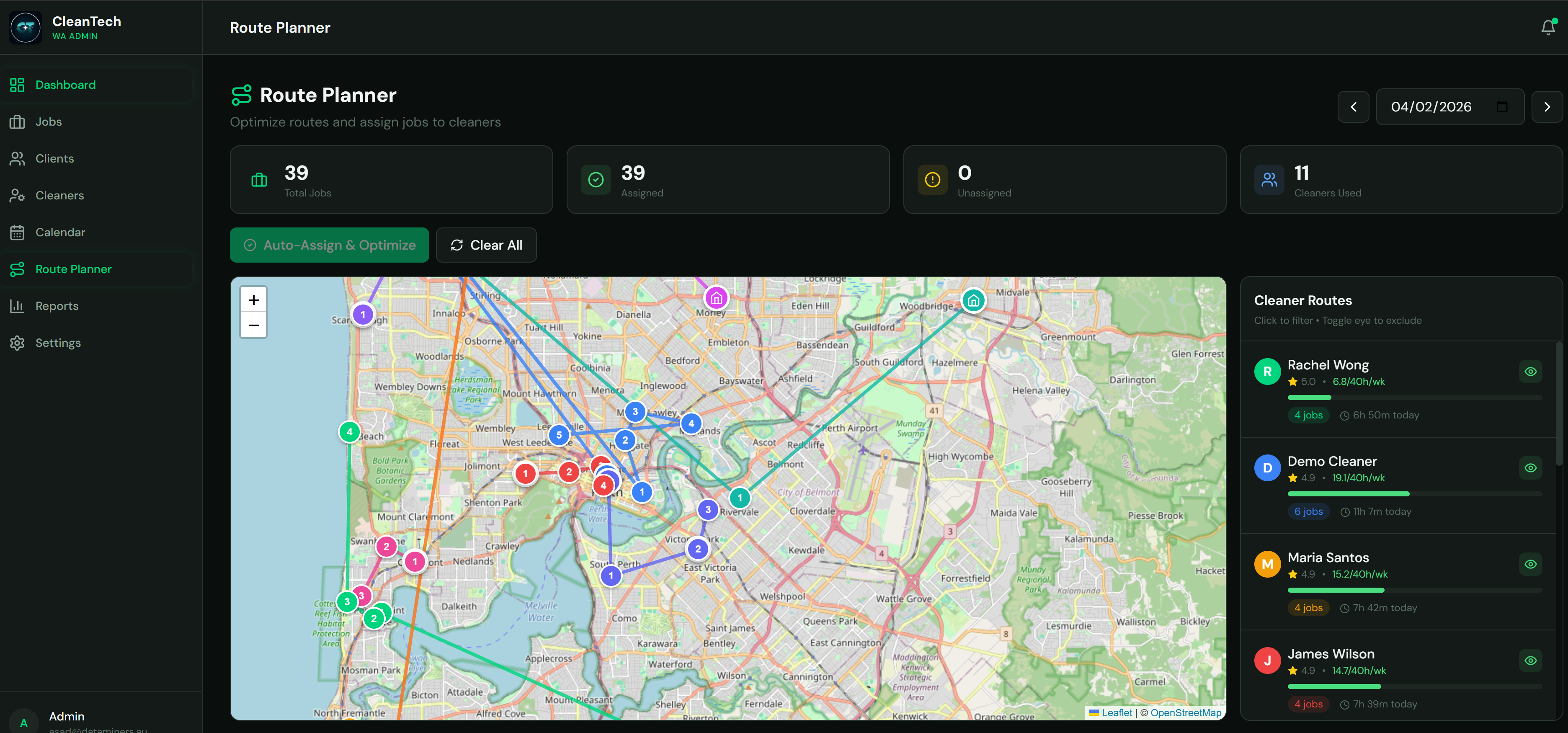
Key Features
AI Voice Issue Reporting — Cleaners speak in any language; Deepgram auto-detects the language and transcribes; GPT-4o-mini extracts specific issues and categorises by trade
Trade Clustering Engine — Groups maintenance issues by trade type and geographic proximity to minimise callout costs across multiple sites
5-Step Mobile Workflow — Structured process: Before photos → Cleaning → After photos → Issue reporting → Job completion, ensuring consistent documentation
Multilingual Support — Full language barrier removal: cleaners report in their native language, clients receive structured English reports
Photo Documentation — Automated capture with dimension constraints and WebP conversion for standardised, bandwidth-efficient visual evidence
Client Portal — Real-time job tracking, maintenance history, trend analysis, and downloadable work order PDFs for property managers
Admin Portal — Cleaner assignment, scheduling, site management, and operational oversight with real-time cloud-synced data
Non-Blocking Operations — Field staff can begin work immediately without waiting for sync; data flows in the background
GPS Site Management — Location-based job assignment and tracking ensures cleaners are at the correct site
Dynamic PDF Reports — Professional maintenance reports generated automatically for client distribution
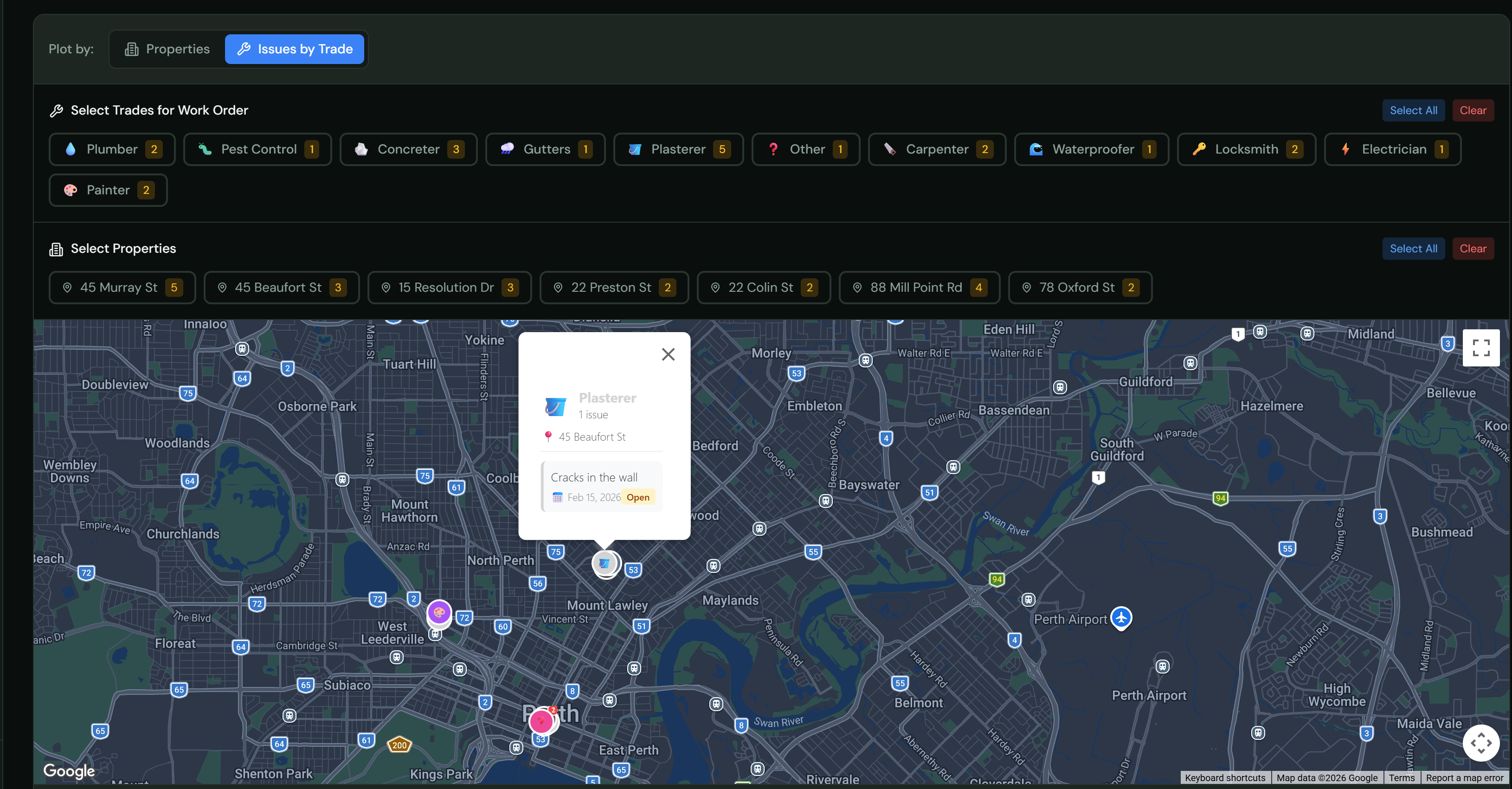
Technology Stack
AI & NLP
Speech Recognition
Mobile
Web Portals
Backend
Document Generation
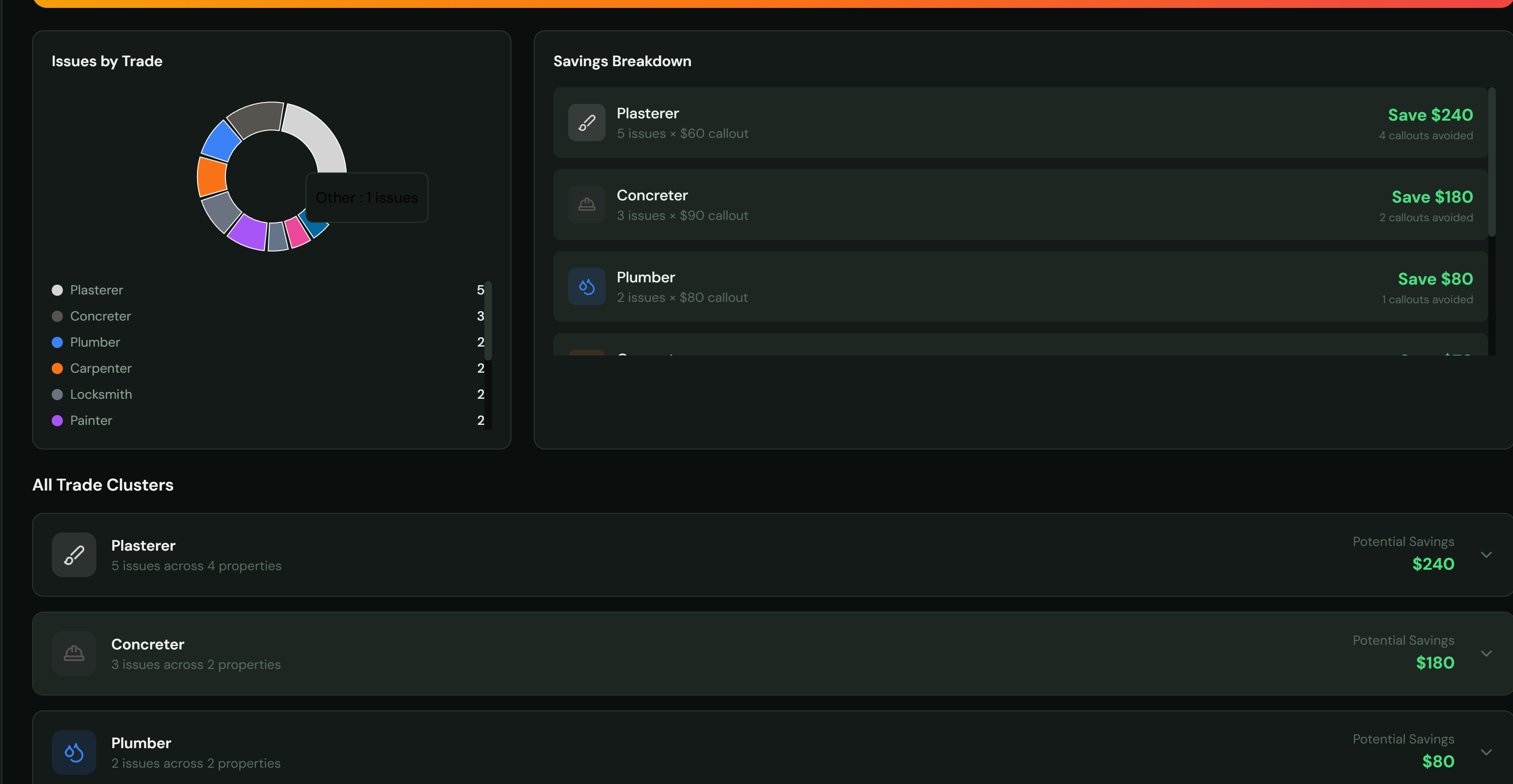
Impact & Results
CleanTech enables early detection of building maintenance issues that would otherwise go unreported until they become emergency repairs — reducing reactive maintenance costs and extending asset lifecycles for commercial property owners.
The trade clustering engine delivers measurable savings by reducing callout fees 30-50% through grouping related issues for single-trade visits across multiple sites. Instead of dispatching a plumber five times to five buildings, one plumber handles all five in a single route.
By removing language barriers from the reporting process, the system unlocks a previously untapped source of building intelligence from the workforce that is already inside every commercial property, every day. No new inspectors needed — the cleaners become the inspection layer.